
Identifying features
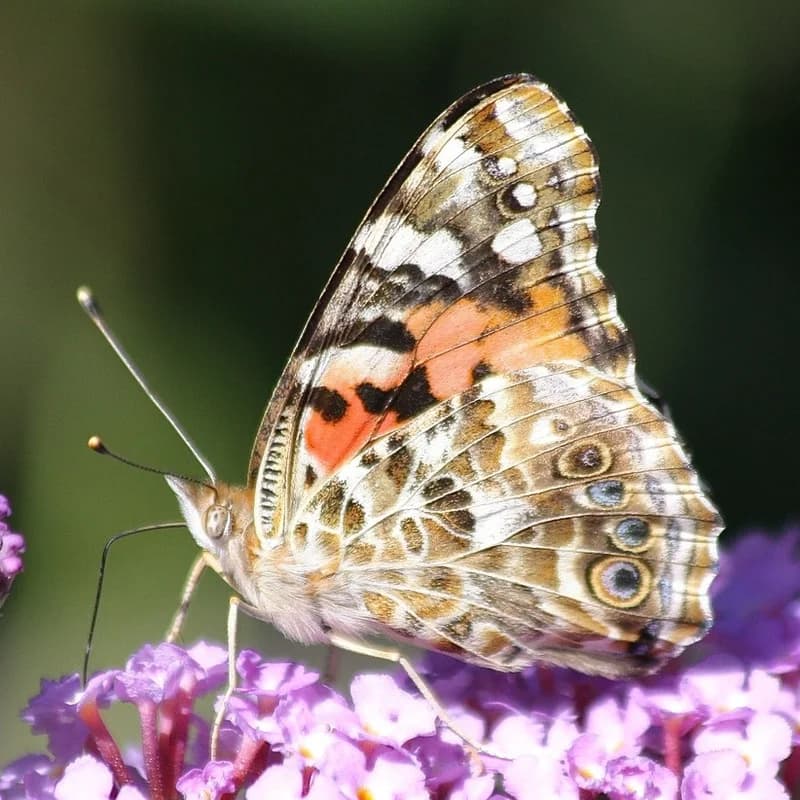
Wingspan 52–59 mm. The upperside is brownish-yellow with coarse black markings; the apex of the forewing is elongated and predominantly black with small white spots. The underside is light brown to pinkish-brown with irregular white spots, a white reticulation pattern, and five eyespots on the hindwing, which are often bluish. Spring migrants are typically heavily bleached.
Similar species
No confused species are described in the sources examined. The elongated, black forewing tip and the five eye spots on the underside of the hindwing are good distinguishing features.
Distribution
Painted Lady is found as an immigrant throughout Northern Europe, including frugal finds on Iceland, the Faroe Islands, and as the first large butterfly species ever on Spitsbergen in 1978. This species is now considered resident and reproducing in Sweden. The habitat of these European butterflies is subtropical North Africa and the Middle East; otherwise, a cosmopolitan distribution.
Biology
The butterfly seeks environments with abundant nectar resources, where there is also bare sand, gravel, or stones to land on. Egg-laying occurs on host plants such as thistles and stinging nettles; the larvae live within matted leaves.