
Identifying features
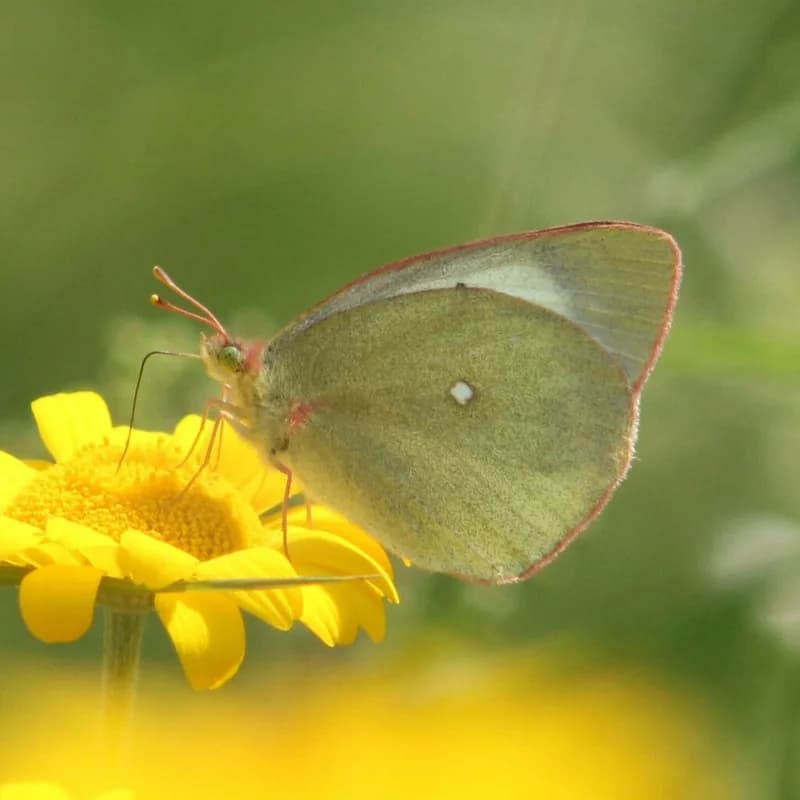
Wingspan 44–54 mm. The male’s upper sides are citron yellow or paler yellow; the female’s are white with a faint touch of turquoise green. Both pairs of wings have broad black or dark brown borders. The underside of the hindwing is sulphur yellow with varying dark green dusting and a white disc spot. Antenna shafts and wing fringes are light wine red.
Similar species
No confused species are described in the sources examined. In the mountains, it may encounter Pale Arctic clouded yellow and Hecla Sulphur, but the yellow colour and mossy ground environment are good indicators.
Distribution
Moorland clouded yellow is found throughout Fennoscandia, from Skåne to Finnmark, but avoids being near the western coast. Its presence ceases at the tree line in the mountain regions. The global distribution extends from northern Central Europe through Siberia.
Biology
The eggs are laid only on bog bilberry, but the larvae can also survive on bilberry. The males are found more often along forest roads or other locations with richer nectar resources than in the wetlands themselves, and they patrol longer distances in their search for unmated females. The courting process occurs during a complex and slow pursuit.