
Identifying features
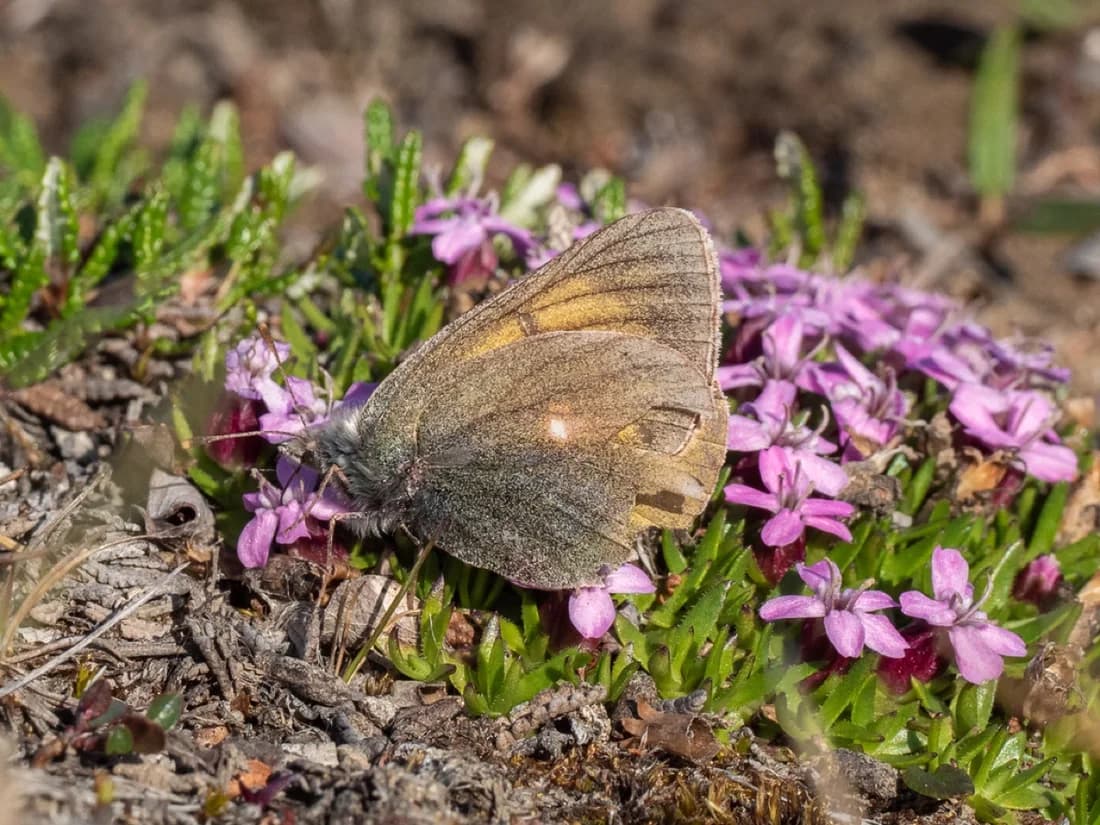
Wingspan 36–46 mm. The male is bright yellow-orange on its upper side, with broad, sharply defined dark brown edges and scarlet wing margins. The female is similar to the male, but has yellow spots in the dark edges of the wings. In repose, the underside is green, with dense black dusting and a red-brown disc spot with a white center on the hindwing.
Similar species
In the northern environments where this species is found, it cannot be confused with any other species. Moorland clouded yellow and Pale Arctic clouded yellow, which are also found in the northernmost Fennoscandia, have yellow or light yellow-green wings.
Distribution
Hecla Sulphur has a circumpolar distribution, ranging from the alpine and arctic regions of Fennoscandia and the Kola Peninsula to northern Ural and the Yamal Peninsula, and further in North America from Alaska to Labrador and north to northern Greenland. In Sweden, the distribution follows the mountain range from Jämtland through the Lapland region; known areas include the rich mountains around Torne träsk. The species is listed as vulnerable in Europe and is strongly threatened within the EU.
Biology
The species is associated with the host plant Astragalus alpinus. The males patrol in search of females, and this species is one of the most rapidly flying diurnal butterflies in the mountains. The butterflies often visit flowers, including Gentiana alta. Development can be direct in the same year, or biennial, likely also two-year in higher altitudes.