
Identifying features
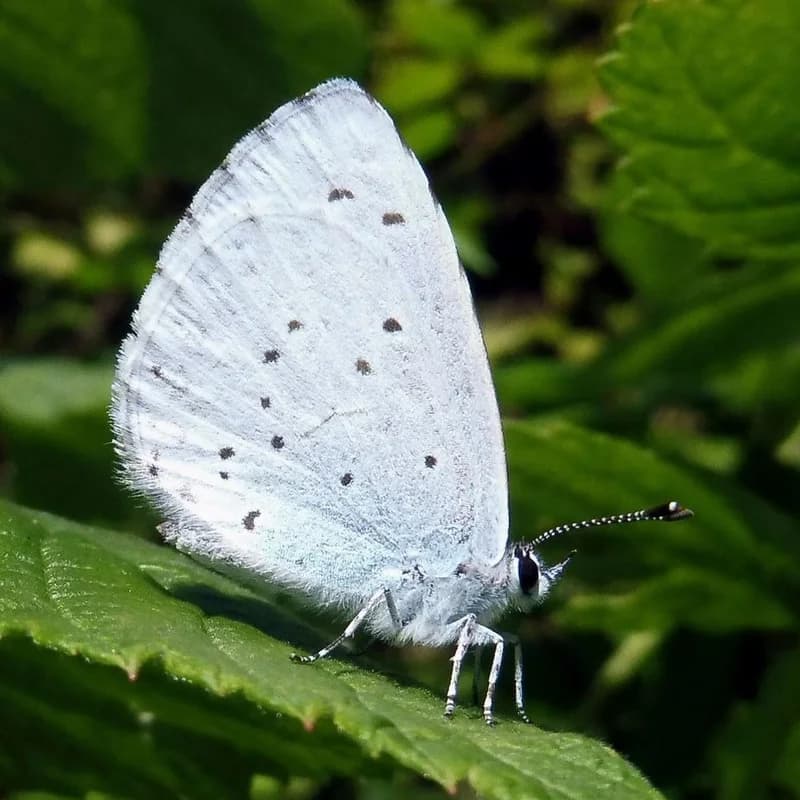
Wingspan 23–32 mm. The male is blue on the upper side, often with a reddish tinge and a thin black border. The female has cleaner, light blue wings with broad black borders on the forewings and black spots on the hindwings. The underside is blue-grey with sparse black spots, without any lighter outlining, and the species lacks any red spots.
Similar species
No similar species are described in the sources consulted.
Distribution
Widespread throughout the southern half of Sweden, rarer further north; absent entirely in the mountain region. The northern limit is defined by the Storsjöbygden in Jämtland and the northern Bottenvik coast. Its global distribution is very extensive: from North Africa through Europe and Siberia to Kamchatka, Japan and China, and onwards throughout all of North America to Panama.
Biology
The larvae primarily feed on shrubs; common gorse is the most important host plant, but eggs are also laid on bog bilberry, bilberry, common heather, and several garden plants. Egg development takes only four days, and larval development approximately three weeks; the pupa overwinters attached to a leaf. The larvae are occasionally attended to by ants. The species is not distinctly localised and likely moves extensively within woodland areas.