
Identifying features
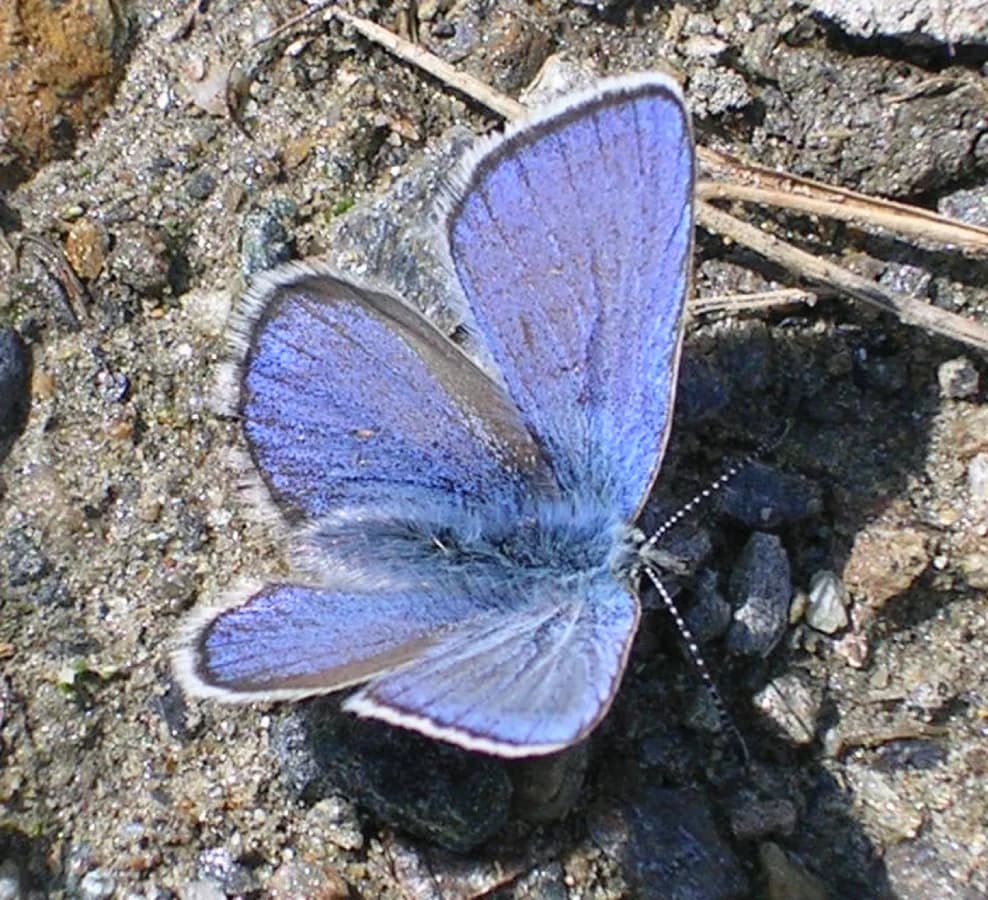
Wingspan 25–29 mm. The male is blue on the upper side, with a colour tone that shifts between light blue with a greenish undertone and darker blue with a violet tone. The female is brown with blue pigment near the wing base and thin black spots on the forewings. The underside of the forewings is ash grey with a distinct black spot, and the underside of the hindwings has two rows of oval white spots.
Similar species
No similar species are described in the sources consulted.
Distribution
In Northern Europe, it is found only in the southern mountain region: from Western Buskerud to Southern Tröndelag (Norway) and further into Härjedalen and Jämtland (Sweden), where it is not particularly rare. The global distribution includes isolated mountain ranges in the Alps, Scandinavia, southern Ural, Altaj, Mongolia, northwestern China, and the Amurområdet.
Biology
The host plant is primarily Astragalus alpinus (Astragalus alpinus); in Norway, the larva has also been found on pod stems and is raised with birch stems. The butterflies seek out rocky outcrops and other bare ground that becomes sun-warmed. Both sexes visit flowers and readily suck moisture from the ground surface. The males patrol in their search for newly emerged females, and the species likely overwinters as a young larva.