
Identifying features
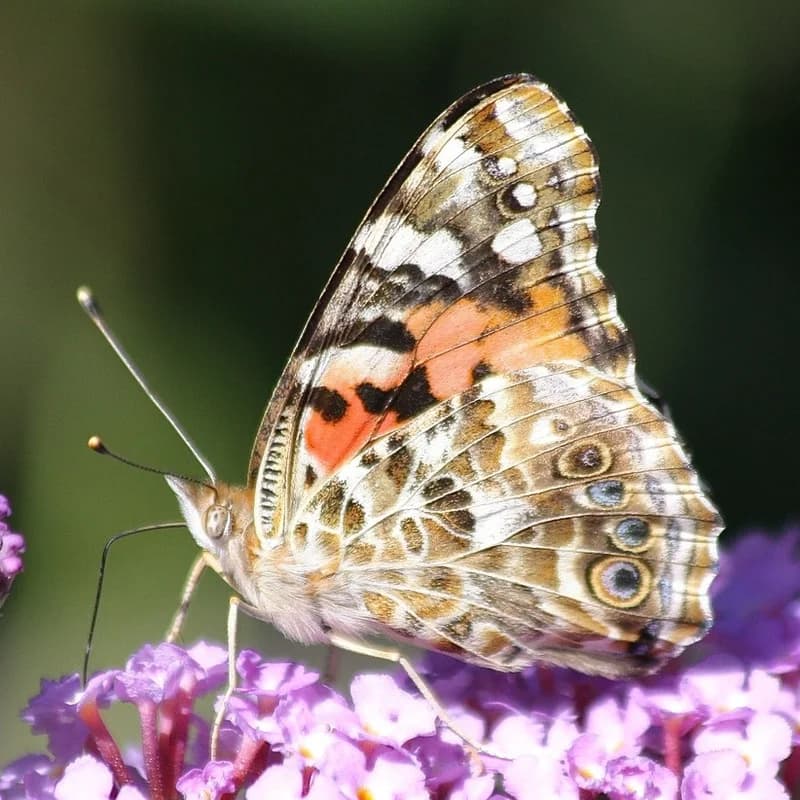
A rather large and distinctly beautiful species with a wingspan of 52–59 mm. Orange wings with black and white markings. It really resembles no other species of butterfly in Norway, but for a beginner, the species is nevertheless relatively easy to identify in the field.
Similar species
The larger Norwegian fritillaries may look somewhat like painted lady, but they lack, among other things, white markings on their wing uppersides. Small tortoiseshell and comma (Polygonia c-album) are smaller, while the very rare large tortoiseshell (Nymphalis polychloros) and yellow-legged tortoiseshell (N. xanthomelas) are larger. Grayling (Hipparchia semele) can look somewhat similar in flight.
Distribution
The species occurs relatively frequently in low-lying areas in southern Norway (Southern Norway). The species has been recorded in all of Norway’s counties, with a concentration in low-lying areas in southern regions. It has also been found at sea and on Spitsbergen. In 2019, the species’ arrival in Norway was completely record-breaking. Presence in agricultural landscapes and other open areas. Approximately 7,900 sightings. Found throughout the world, except in South America and Antarctica.
Biology
Larval food is primarily thistles, but at least in Sweden, hawthorn berries can also be used. It cannot overwinter in Norway, and the summer generation flies largely south in August. A very good and hardy fly.