
Identifying features
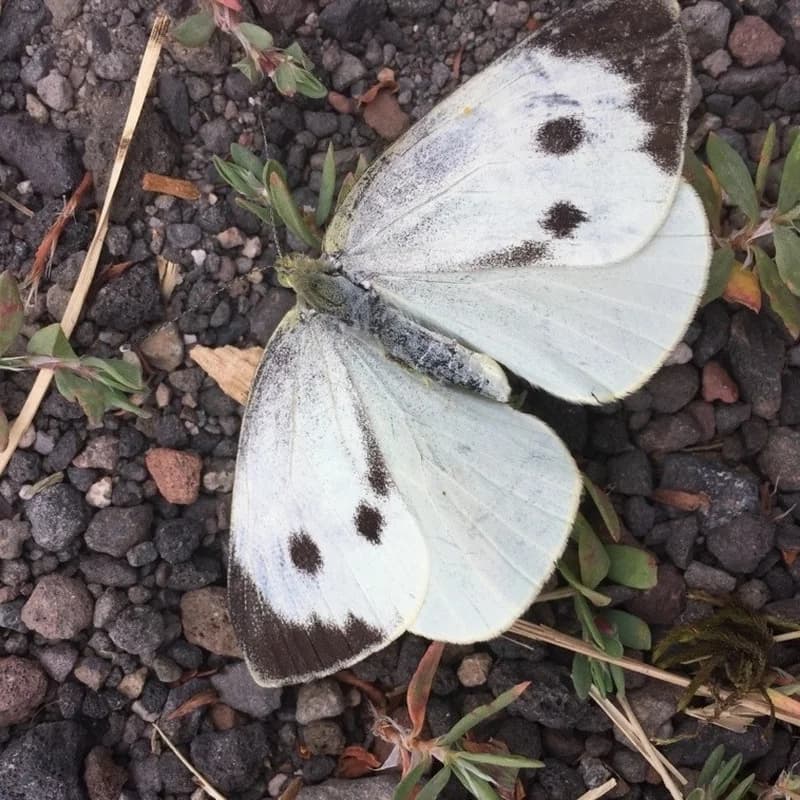
Wingspan 54–61 mm. Both wing pairs are white on the upper side. The forewing tip is deep black, and the hindwing has a black spot on the front edge. In the female, there are also two round black spots in the outer part of the forewing, as well as a long line along the trailing edge. The underside of the hindwing is light grey without a clear ribbed pattern.
Similar species
Resembles small white, but is significantly larger; the black area at the tip of the forewing typically extends further back along the wing margin, and the female's black spots are larger and more sharply defined. It can be distinguished from green-veined white by the fact that the underside of the hindwing does not exhibit prominent grey markings.
Distribution
Common throughout the country, except for Troms and Finnmark; finds are only rare in these two counties.
Biology
The eggs are most often laid on the underside of the leaves of various cross-flowers, especially rapeseed, turnip, and other domesticated cabbage species (Brassica). The larva is green with black spots and stripes in yellow and green on its back, and it measures approximately 35–40 mm in length. The overwintering occurs as a pupa hanging on brick walls, stones, or similar. The larva can cause significant damage to cabbage plants and acts as a pest in fields and gardens.