
Identifying features
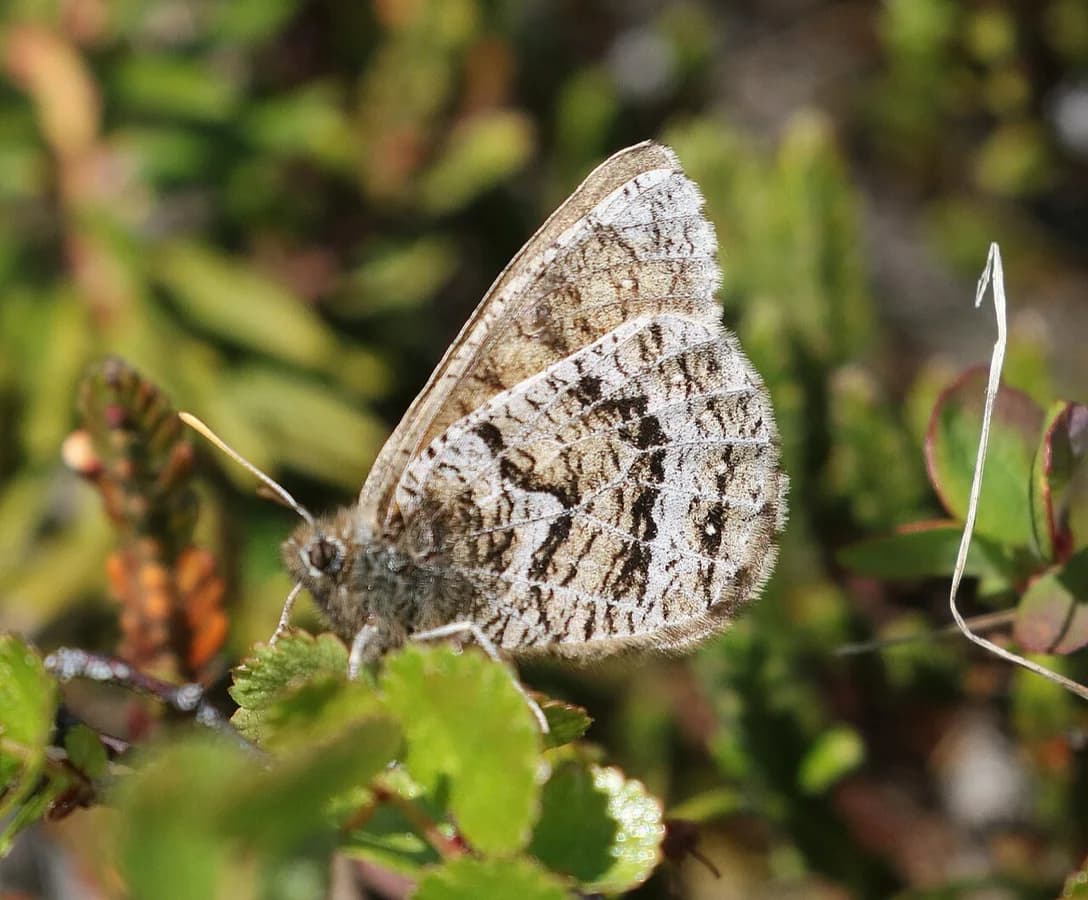
Medium-sized moth with a wingspan of 39–48 mm; slightly smaller than other Nordic Oeneis species. The wings are relatively narrow, the body small and densely hairy, and the antennae are quite short. The upper side of the wings is uniformly ochre yellow; the female sometimes has a small eye spot at the tip of the forewing. The underside of the forewing is ochre yellow with grey speckling towards the edge. The underside of the hindwing is speckled with grey and white, with two broad, irregular, white cross-bands. The larva is ochre to yellowish-brown, with a brown dorsal stripe and two narrow, brown lateral stripes.
Similar species
This species differs from most other butterflies in that it lacks rings and eyespots. No potential look-alikes have been described in the sources examined.
Distribution
It was found with certainty only in northern Fennoscandia (Norway, Sweden, and Finland), but is likely found in wider areas, including North America. In Norway, it is found here and there between Alta and South Varanger in Finnmark. It does not appear to be common anywhere.
Biology
The larvae live on Timothy grass (Phleum spp.) and sheep’s fescue (Festuca ovina).