
Identifying features
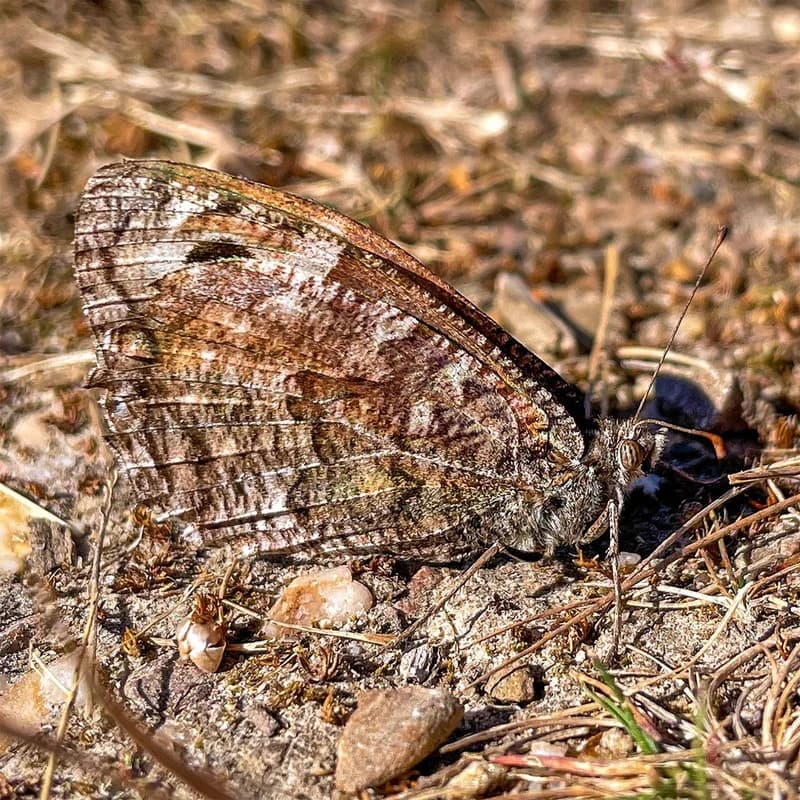
Medium-sized ringlet; the female is significantly larger and stronger than the male. The upper side has a light brown base colour with a broad, irregular, light yellow band along the edges of the wings. Within the band is a small eye spot at the front of the forewings, often accompanied by one or two smaller black spots further back. The underside of the forewings is light yellow and brown with darker edges and an eye spot at the tip. The hindwing underside is a flat, dark grey, providing excellent camouflage when the butterfly sits on mossy rocks.
Similar species
No confused species are described in the examined sources.
Distribution
Found along the coast in the southernmost Norway region. Relatively common along the coast of Rogaland, except in the innermost part of Oslofjord. Scattered finds north of Flora in Sogn og Fjordane. A few locations in Southern Norway, it is also found in the inland.
Biology
The larva feeds on early hair-grass (Aira praecox) and fescues (Festuca). The forewing eyespot is used to deter hunting birds: the butterfly flicks the eye upwards to frighten away attackers.