Field guide · Denmark
Blues, coppers and hairstreaks · Denmark

Brown Hairstreak

Thecla betulae

Brown Hairstreak is present and local in Denmark. Wingspan 33-41 mm. The flight period is from late July to September. It primarily lives in grasslands, open scrub forests, and forest edges, with abundant growth of blackthorn or mirabel – also, orchards are frequent habitats.

Status in this countryLocally present in DenmarkLC (Least concern)
Brown Hairstreak

Flight period

The flight period is from late July to September. The eggs can be found from late autumn to spring.

Habitat

It primarily inhabits grasslands, light-open scrub forests and woodland edges, with extensive growths of blackthorn or cherry – parks are also frequent habitats. It may occasionally fly some distance from trees, and is sometimes found randomly in gardens.

Identifying features

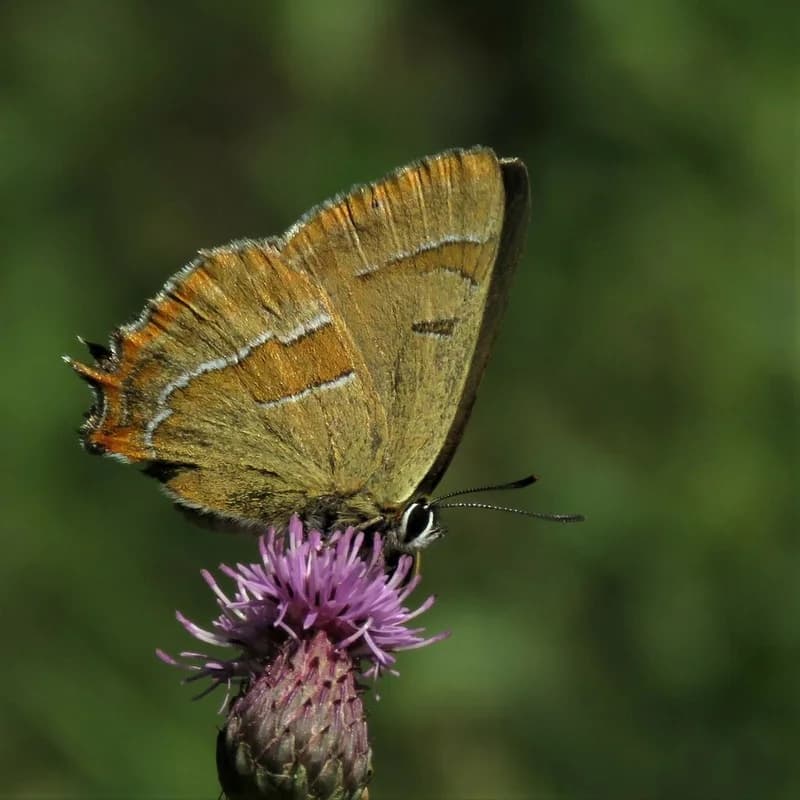
Wingspan 33-41 mm. Easily recognisable by the golden-yellow colours on the underside and the prominent black and white lines.

Similar species

Satyrium species, but it is easily recognisable by its orange underside, with two white stripes.

Distribution

Can occur locally and in certain years in large numbers, but is usually infrequent and difficult to observe. Relatively widespread in East Jutland and on the Islands, where it is particularly abundant and numerous along the Roskilde Fjord from Frederiksværk to Frederikssund.

Biology

The males are rarely seen, as they spend their time at the top of the trees, where they suck honeydew from aphids. The beautiful females fly further down, partly to lay eggs, and also to feed on flowers (especially fond of plantain, canary grass, and garden chamomile) or overripe fruit.