
Identifying features
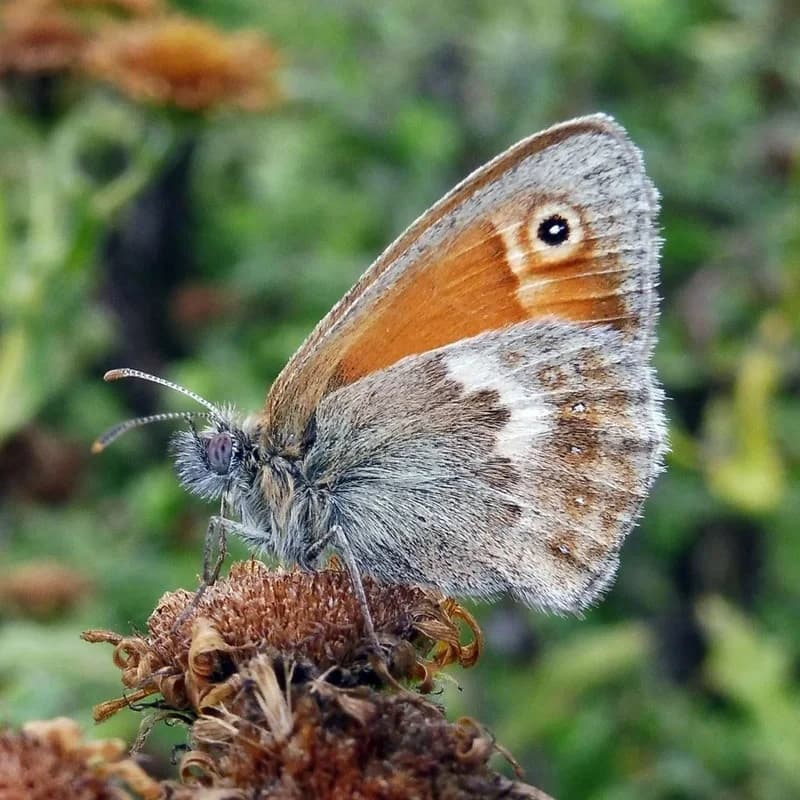
Wingspan: 24–34 mm. The wing uppersides are ochre-yellow to orange, with a black eyespot at the forewing tip and faint pale markings on the hindwings.
Similar species
It can be easily confused with large heath, but this one is larger and darker, and ‘almost always’ has a series of large, clear eye spots along the inner edge of the hind wing, which is rarely the case with small heath (but not impossible). Large heath also has a stronger stripe of light on the underside of the forewing than small heath does.
Distribution
Widespread and common throughout Denmark, even on the smallest islands.
Biology
Pamphilus is actively seeking flowers (especially in warmer weather). It does not appear to have specific preferences in flower selection, but is nevertheless frequently observed on buttercups, thistles, or bluebells.