
Identifying features
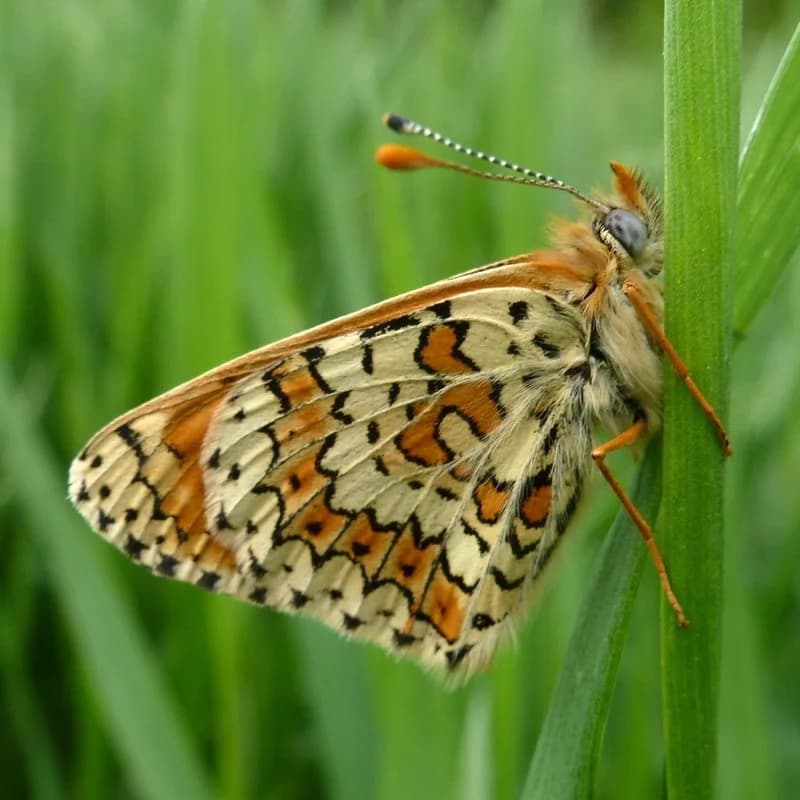
Wingspan: 35-45 mm. Both the uppersides of the forewings and hindwings are covered with small ochre-yellow to orange patches.
Similar species
Glanville fritillary may be confused with heath fritillary, false heath fritillary, and marsh fritillary. Heath fritillary does not have markings in the outer field of the hindwings, which Glanville fritillary does, and the upperside of the wing is also a more brownish tone, whereas Glanville fritillary is lighter and more ochre-yellow-orange.
Distribution
After decades of decline, Glanville fritillary has spread during the latest decade from its traditional core areas in Jutland and coastal sites on the Danish islands to large parts of the country.
Biology
A swift and active butterfly, which is neither picky about its nectar sources nor hesitant in its feeding. In cloudy weather, the cinxia is often seen sitting with its wings folded, sheltered under leaves of tall herbs or small bushes.