
Identifying features
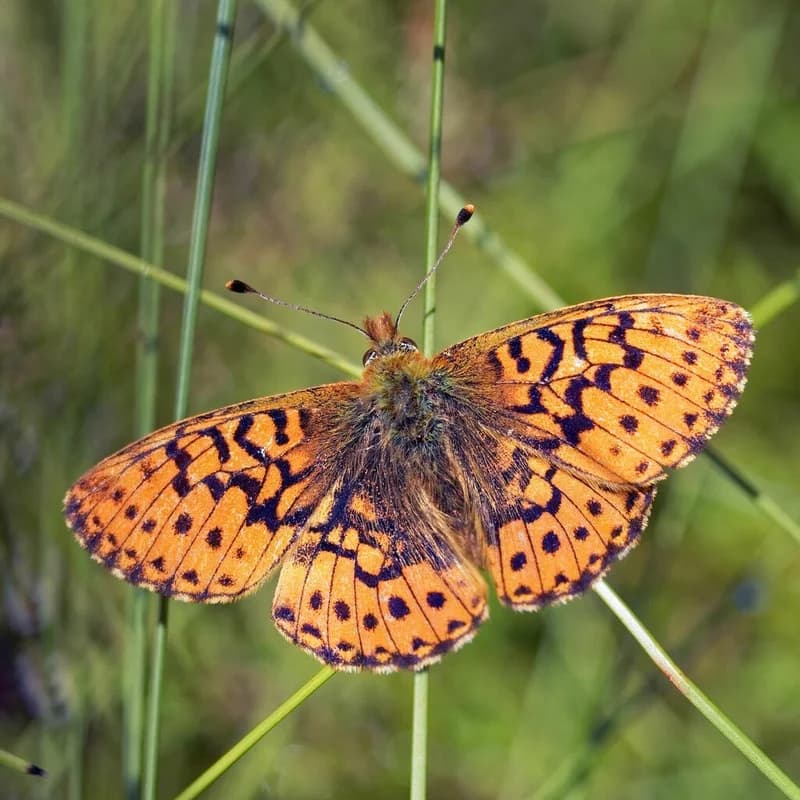
Wingspan: 32–42 mm. The warm reddish-orange ground colour of the wing upperside is divided by black patches and markings.
Similar species
Cranberry fritillary can (from the upperside of the wing) be easily confused with the other small pearly moths, but can easily be identified by the characteristic underside of the hindwing.
Distribution
Danish cranberry fritillaries are considered to belong to an overlap between the subspecies alethea and the nominate subspecies arsilache. The species has declined greatly over the last 70–80 years because of extensive drainage and especially peat extraction, but fortunately remains at several sites in Jutland.
Biology
Cranberry fritillary primarily inhabits quaking bogs and raised bogs. In Jutland, it can be found in several locations throughout North and West Jutland within heathland bogs.