Field guide · Denmark
Brush-footed butterflies · Denmark

Comma

Polygonia c-album

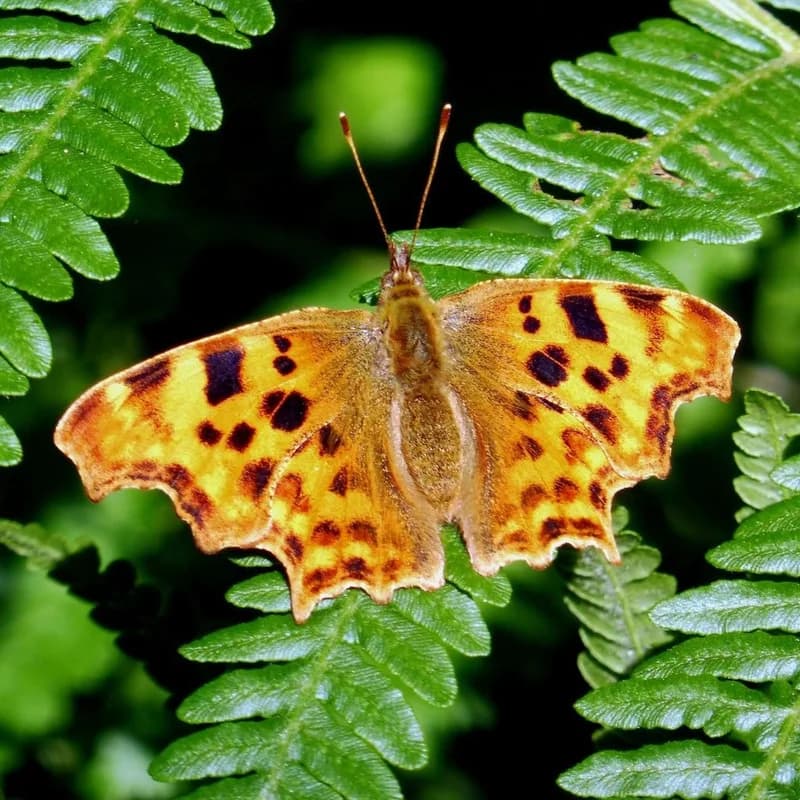
Comma is common in Denmark. Wing span: 45-50 mm. Comma can be observed already from March after overwintering. Comma is associated with forest edges, forest clearings, and other light-exposed areas with the food plants – also in the edge of residential areas.

Status in this countryCommon in DenmarkLC (Least concern)
Comma

Flight period

Comma can be observed as early as March, after overwintering. It flies until the beginning of June.

Habitat

Comma is associated with forest edges, forest openings, and other light-exposed areas where the food plants are found – furthermore, also at the edge of residential areas. However, it tends to wander around and can be found in other places as well.

Identifying features

Wingspan: 45-50 mm. Comma is the most toothed member of the Danish family of moths with fringed wings.

Similar species

Comma can be confused with other long-wings, particularly species such as Yellow-legged tortoiseshell and large tortoiseshell. However, these species are very rare, less adorned, and lack the white c-marking on the wing's trailing edge.

Distribution

Comma has been a very rare East Danish species, but has become more numerous in recent years, spreading across Funen and along the East Jutland coast.

Biology

Comma overwinters in tree hollows, among decaying leaves, or in dense vegetation. The eggs are laid on a large nettle (Urtica dioica), hemp (Humulus lupulus), elm (Ulmus) and willow (Salix), perhaps also willow?