Field guide · Denmark
Brush-footed butterflies · Denmark

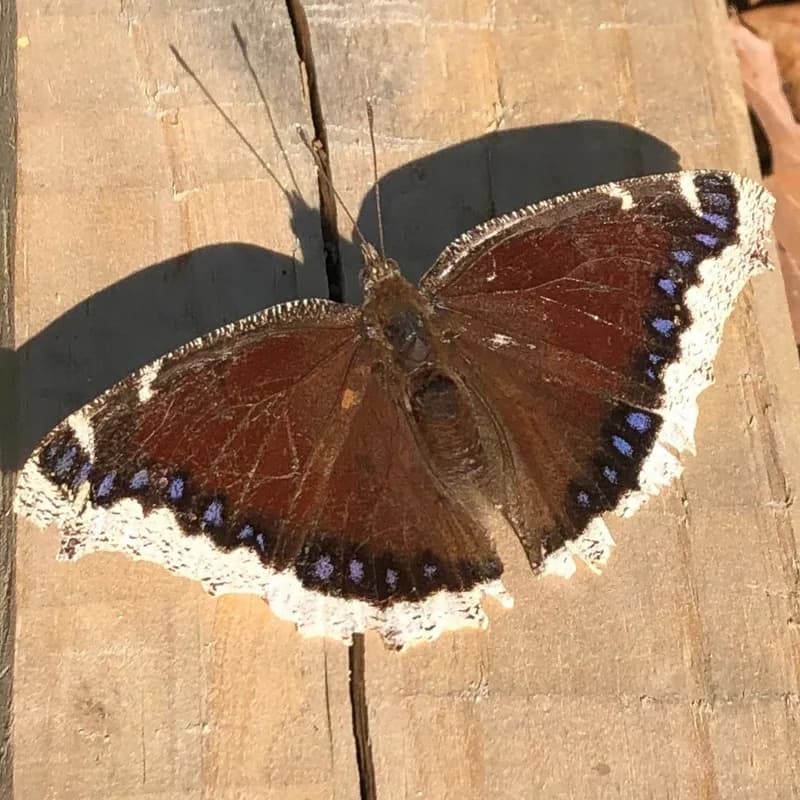
Mourning cloak

Nymphalis antiopa

Mourning cloak is present and local in Denmark. Wing span: 70-80 mm. Mourning cloak flies after overwintering from March to June. Mourning cloak is associated with forest edges, forest clearings, and other light-open areas with willow, birch, and elm.

Status in this countryLocally present in DenmarkVU (Vulnerable)
Mourning cloak

Flight period

Mourning cloak emerges from winter dormancy from March to June. A new generation emerges from late July to October.

Habitat

Mourning cloak is associated with forest edges, forest light, and other open areas with willow, birch, and elm. It is particularly attracted to flowering gooseberries after winter, and also to fallen fruit, flowering thistles, and sap from injured trees.

Identifying features

Wingspan: 70-80 mm. It is thus one of the largest Danish day-flying butterflies.

Similar species

The Mourning Cloak is very distinctive and cannot be confused with other Danish butterfly species. However, in flight, there is a possibility of confusion with, for example, Peacock butterfly, which also appears dark, but the Mourning Cloak is just a little larger and tends to float considerably more.

Distribution

Mourning cloak varies incredibly in distribution. Some years, only a few individuals are observed, while in other years it is widely distributed.

Biology

The mourning cloak overwinters in hollow trees, beneath bark, and in piles of wood. The eggs are laid on slender branches of willow (Salix), birch (Betula), elm (Ulmus), or white willow (Populus tremula).